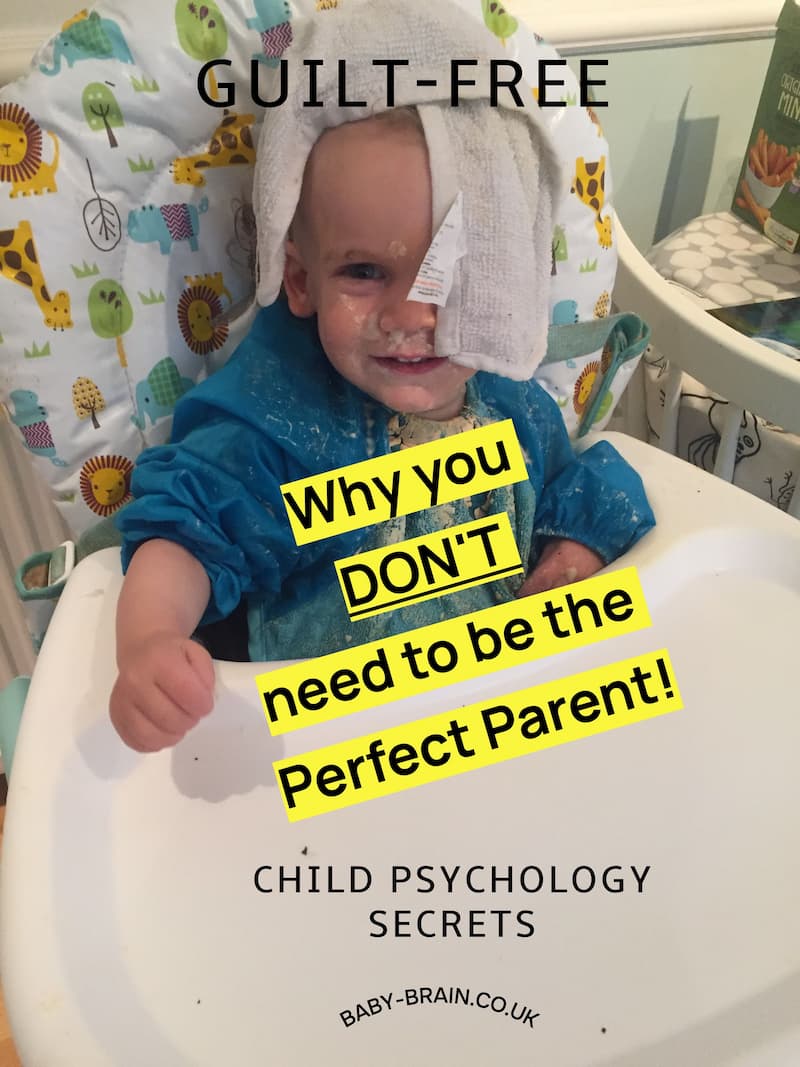
Every day, social media serves us a curated buffet of parenting perfection: immaculate playrooms, organic meal-prep, and parents who seemingly never lose their temper. It’s no wonder so many of us struggle with a constant, nagging sense of parenting guilt, feeling like we constantly fall short of that impossible ideal.
As a psychologist, I know the textbook theory behind child development. But as a parent of three young children, I also know the chaotic reality of the morning rush when someone has spilled milk on the rug, someone else refuses to wear shoes, and the clock is ticking.
When the household chaos peaks and that familiar anxiety creeps in, here is the child psychology parenting advice I lean on: Your children do not need a perfect parent. In fact, striving to be one might actually hold them back.
***
Understanding the Root of Parental Guilt
When we look at how to overcome parental guilt, we first have to examine what we are expecting of ourselves. We often feel like we are failing if we aren’t perfectly attentive, endlessly patient, and instantly responsive 100% of the time. But developmental science tells a completely different story.
Back in the 1950s, a British paediatrician and psychoanalyst named Donald Winnicott introduced a liberating concept that every modern family needs to hear: The “Good Enough” Parent.
Winnicott noticed that while tiny infants need fast, near-perfect responsiveness, older babies and toddlers actually benefit when their parents “fail” them in small, manageable ways.
What do these everyday “failures” look like in a busy home?
- Making a toddler wait two minutes for their milk while you finish pouring your tea.
- Misunderstanding a tantrum for a moment before realising they are actually just exhausted.
- Losing your patience, taking a breath, and apologizing to them afterward.
***
Why a “Perfect Parent” Isn’t the Goal
When we don’t cater to every single whim instantly, something incredible happens: we give our children a safe, micro-dose of reality.
If a parent acts as a completely perfect parent, protecting the child from every minor discomfort, the child never has to adapt. But when a “good enough” parent expects a child to wait their turn or cope with a minor disappointment, the child learns to navigate frustration. They learn to self-soothe, problem-solve, and realise that a temporary delay isn’t a catastrophe.
In a house with three children, this happens entirely naturally. You physically cannot be everywhere at once. Your time and attention are divided—and clinically speaking, that is a good thing for their independence.

***
Your Practical Strategy to Overcome Parental Guilt Today:
The next time you feel that familiar pang of guilt because the living room looks like a toy bomb went off, or because you let them watch an extra 20 minutes of TV so you could just sit down and breathe, reframe the moment.
You aren’t failing them. You are letting them experience a normal, imperfect human environment.
The Professional Takeaway: We aren’t aiming for perfection; we are aiming for connection. When you get it wrong—because we all do—the magic happens in the repair. A quick, “I’m sorry I snapped, I was feeling rushed. Let’s hug and try again,” teaches your child more about emotional maturity and resilience than a perfect, temper-free day ever could.
And remember…. be kind to yourself today. You are more than good enough! 🙂